Knowing that you own a BMW 320i or 530d is not enough when you are researching repairs, reliability or parts. BMW often changed engines during a model generation, and the same sales badge can describe very different hardware depending on year and market.
That is why BMW engine codes matter.
Engine code vs model badge
A model badge tells you where the car sits in the sales range. An engine code identifies an engine family.
For example, two BMWs carrying similar 20i or 30i badges can use different engine generations depending on production date.
Engine code vs chassis code
Do not confuse engine codes with chassis codes.
| Code type | Example | Identifies |
|---|---|---|
| Chassis code | F30 | Vehicle generation/body family |
| Engine code | N55 | Engine family |
| Chassis code | G20 | Vehicle generation/body family |
| Engine code | B48 | Engine family |
BMW N-series engines
The N-series includes many engines from BMW's transition into widespread turbocharging and direct injection.
N47
Four-cylinder turbo diesel commonly found in older 18d and 20d applications. It is especially well known in used-car discussions because of timing-chain concerns on certain versions.
Read BMW N47 reliability and timing chain problems.
N55
Turbocharged inline-six petrol engine used in many 35i applications. It preceded the B58 in BMW's six-cylinder petrol evolution.
See N55 vs B58.
N57
Six-cylinder turbo diesel used in powerful diesel sedans and SUVs.
Read BMW N57 reliability.
BMW B-series engines
B-series engines belong to BMW's newer modular generation.
B47
Four-cylinder diesel succeeding older N-series applications. Used widely in newer 18d and 20d vehicles.
B48
Four-cylinder turbo petrol engine used across a broad range of modern BMWs. Read B48 reliability.
B58
Turbocharged inline-six petrol engine strongly associated with 40i BMWs. Read B58 reliability.
BMW S-series engines
S codes are associated with BMW M-developed high-performance engines.
S55
Turbo inline-six used in the F80/F82 M3/M4 era and related applications.
S58
Newer BMW M turbo inline-six used in G-generation performance vehicles.
Compare them in BMW S55 vs S58.
Why exact variants matter
Knowing only B58 or N57 is still not always enough for ordering parts. Engine families contain revisions and variant codes. Production date, market and vehicle specification can affect components.
How to identify your BMW engine correctly
- Start with the VIN.
- Confirm the vehicle production date.
- Use BMW-specific vehicle data or a reliable parts catalog.
- Confirm engine family and exact variant.
- Cross-check OEM part numbers before ordering.
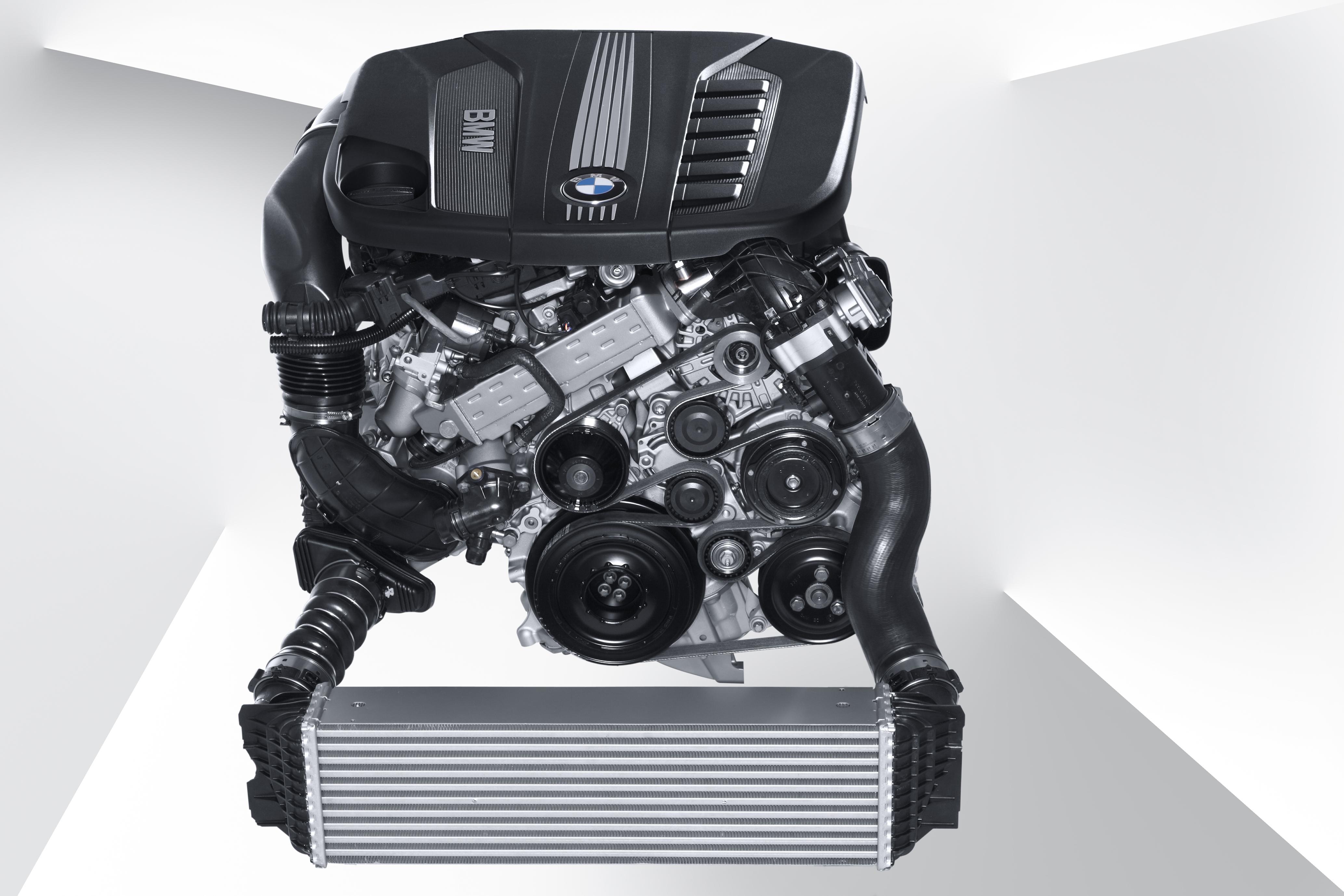
Do not identify an engine from the plastic cover
Engine covers are easily changed and multiple engines can look similar in photographs. VIN data is much stronger evidence.
Why engine codes are useful for Google searches
Searching B58 coolant leak is far more precise than searching BMW 3 Series coolant problem. The engine code eliminates many irrelevant generations and powertrains.
Useful BMW engine codes to learn
| Code | Basic description |
|---|---|
| N47 | Older four-cylinder diesel family |
| N55 | Turbo petrol inline-six |
| N57 | Turbo diesel inline-six |
| B47 | Newer four-cylinder diesel family |
| B48 | Newer turbo petrol four-cylinder |
| B58 | Newer turbo petrol inline-six |
| S55 | BMW M turbo inline-six |
| S58 | Newer BMW M turbo inline-six |
Next step
Once you know your engine code, use the dedicated guide rather than generic BMW advice. Start with the BMW Engines Explained hub and follow the engine-specific links.

Leave a comment
Your email address will not be published. Required fields are marked *