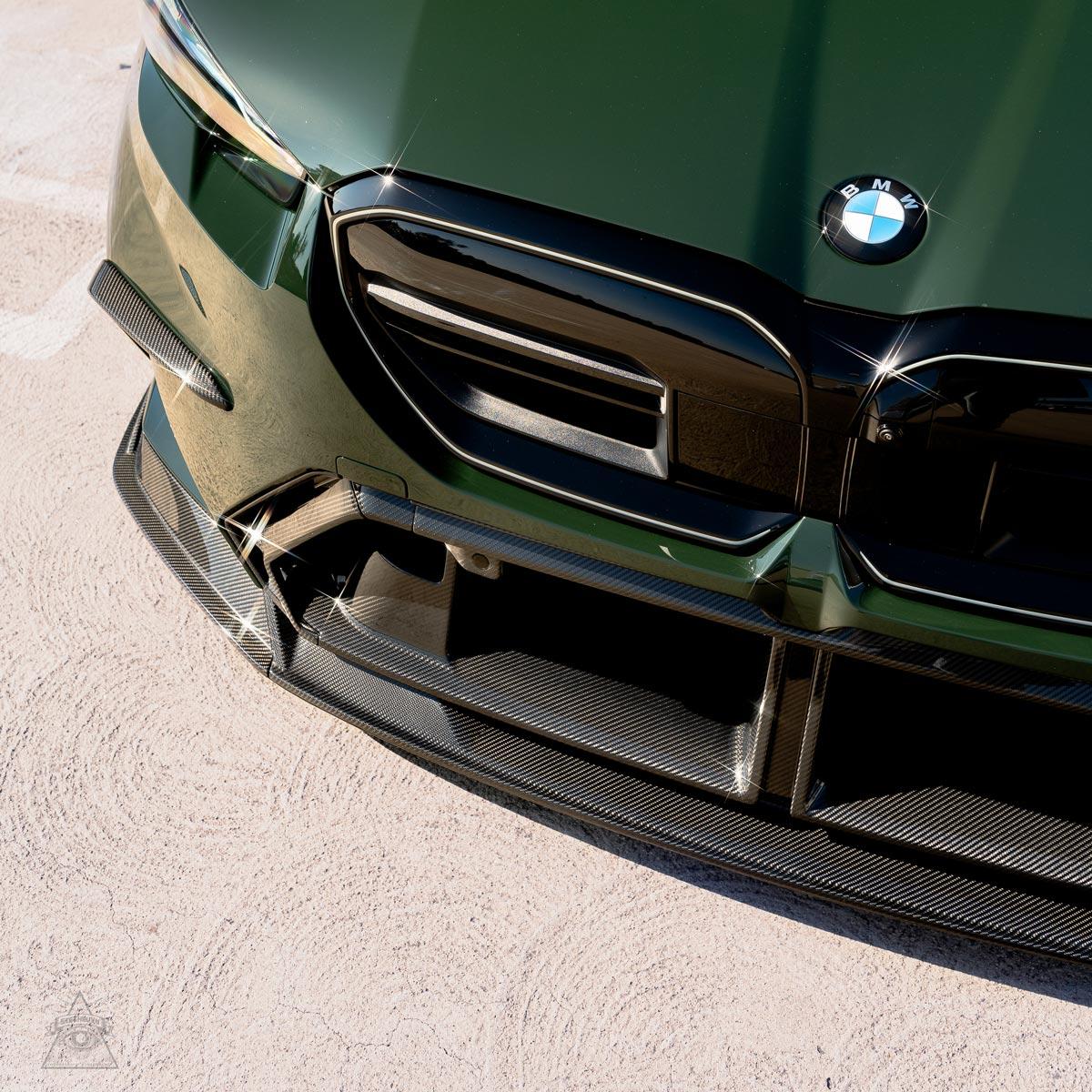
Why Carbon Fiber Works So Well on BMW Models
Carbon fiber has become one of the defining materials of modern BMW performance styling. It appears naturally alongside M cars, M Performance accessories, aerodynamic packages and motorsport-inspired builds because it combines low weight, rigidity and a distinctive technical appearance. On the right BMW, even a relatively small carbon component can change the visual character of the entire car.
But carbon fiber upgrades are also one of the easiest areas in which to buy the wrong part. A splitter advertised simply as “BMW M3 carbon” may fit only one generation, one bumper design or one specific production period. A spoiler that fits a G82 M4 Coupe will not necessarily fit another 4 Series body style. An M Sport bumper and a genuine BMW M bumper can also require completely different components.
This guide explains how BMW carbon fiber parts differ, which upgrades make the most sense, how to identify correct fitment, what construction methods matter, what to inspect before ordering and how to avoid the common mistakes that lead to poor alignment, damaged parts or unnecessary returns.

What Is an Automotive Carbon Fiber Part?
Carbon fiber is produced from extremely thin carbon filaments that are woven into fabric and combined with resin to create a composite structure. Once cured, the resulting material can be exceptionally stiff relative to its weight.
However, the term “carbon fiber part” is used very broadly in the aftermarket. Several products that look similar in photographs may use completely different construction methods.
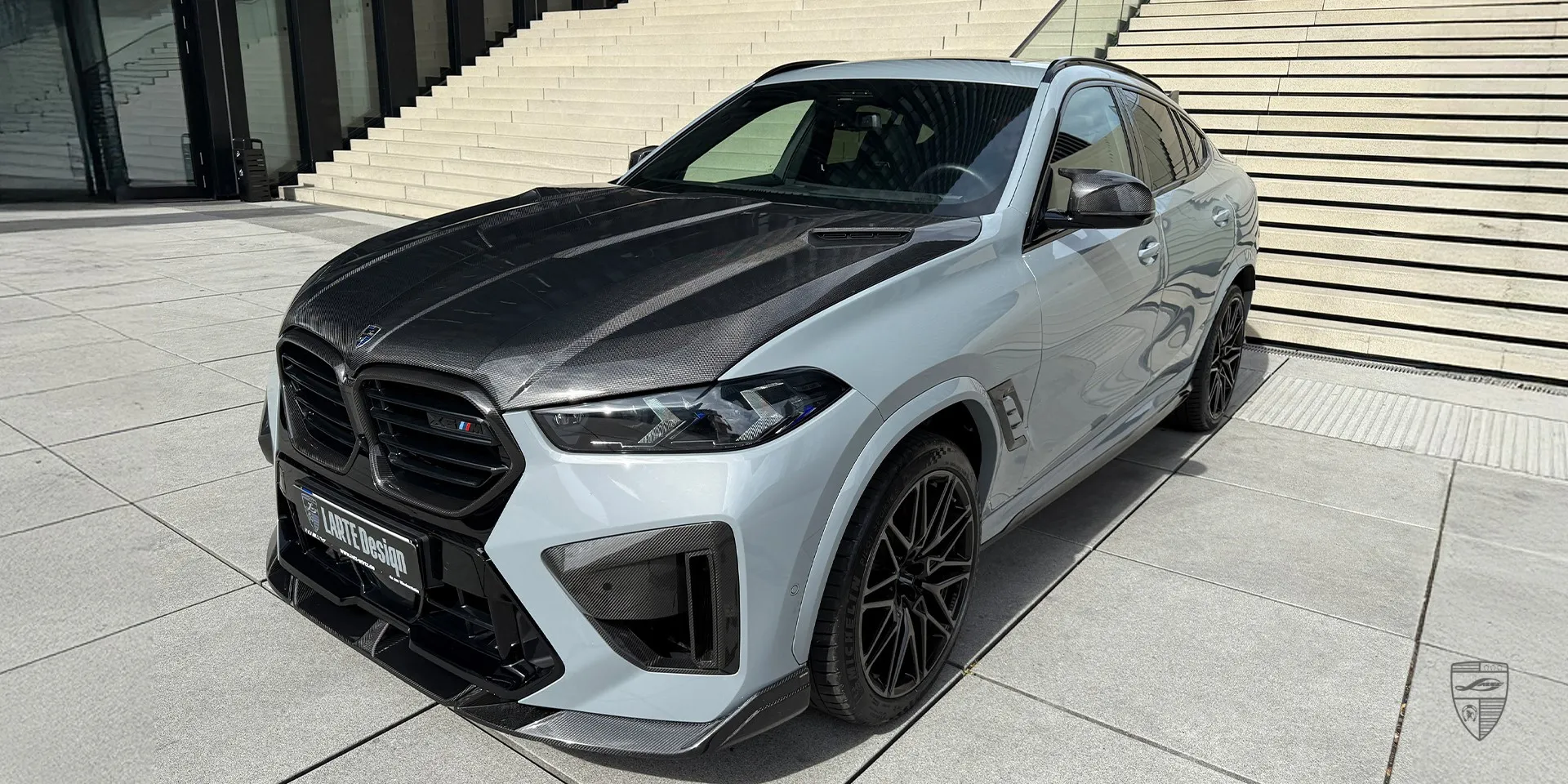
Dry Carbon and Prepreg Carbon
Dry carbon usually refers to prepreg carbon fabric in which the resin content is controlled before the component is formed. The material is cured under controlled conditions, often involving elevated temperature and pressure.
Potential advantages include:
- Low component weight.
- High structural rigidity.
- Consistent resin distribution.
- Thin construction.
- High-quality surface finish.
- Good strength-to-weight ratio.
Because manufacturing is more demanding, genuine prepreg components are usually positioned at the premium end of the market.
Wet Carbon Fiber
Wet carbon uses carbon fabric combined with liquid resin during production. A well-manufactured wet-carbon component can still provide excellent visual quality and sufficient strength for most cosmetic exterior applications.
For spoilers, mirror covers, trim pieces and non-structural body components, a good wet-carbon part can be entirely suitable.
The real issue is manufacturing quality. Poor moulds, excessive resin, weak curing or inaccurate trimming can produce disappointing results regardless of whether the product is marketed as wet or dry carbon.
Carbon Fiber Overlay
Some parts use an existing plastic, fiberglass or composite structure as a base and add genuine carbon fiber over the surface.
This is commonly used for:
- Mirror covers.
- Interior trim panels.
- Center console components.
- Small exterior trim pieces.
- Decorative vents.
Overlay components can look excellent, but they should not be confused with full lightweight carbon replacements.
Carbon-Look ABS Plastic
Carbon-look plastic is not genuine carbon fiber. These components may use printed patterns, hydro dipping or textured surfaces to imitate carbon weave.
There is nothing inherently wrong with using carbon-look plastic for an inexpensive styling project, but sellers should describe it accurately. Buyers looking specifically for genuine carbon construction should always check the material specification rather than relying only on photographs.
BMW M Performance Styling and Aftermarket Carbon Fiber
BMW has made carbon styling familiar to customers through factory and M Performance accessories. This has created a strong visual language: carbon splitters, spoilers, mirror caps, diffusers and interior trim now look completely natural on many BMW models.
Aftermarket manufacturers build on this style with both OEM-inspired and more aggressive designs.
When choosing between them, decide whether your goal is:
- OEM-plus appearance.
- Factory M Performance style.
- Track-inspired styling.
- Aggressive show-car appearance.
- Weight reduction.
- A coordinated full-body carbon package.
The best-looking build is not necessarily the one with the largest number of carbon parts. Consistency usually matters more than quantity.
The Most Popular BMW Carbon Fiber Upgrades
1. Carbon Fiber Front Splitters
A front splitter is one of the highest-impact exterior modifications available for a BMW. It changes the lower edge of the bumper, makes the front appear lower and can visually emphasize BMW's air intakes and grille design.
Splitters are especially popular on:
- BMW M2.
- BMW M3.
- BMW M4.
- BMW M5.
- BMW M8.
- M Sport 3 Series and 4 Series.
- X3 M and X4 M.
- X5 M and X6 M.
Fitment is critical because a standard bumper, M Sport bumper and full M-car bumper are often completely different.
2. Carbon Fiber Rear Diffusers
A carbon diffuser can dramatically change the rear profile of a BMW. It frames the exhaust system, visually lowers the bumper and can create a stronger connection between the rear design and other carbon parts on the car.
Before buying, check:
- Number and position of exhaust outlets.
- Exact bumper design.
- Facelift versus pre-facelift.
- Whether the car is M Sport or a true M model.
- Parking sensor positions.
- Whether additional brackets are included.
Some rear diffuser designs are primarily cosmetic. More aggressive fin shapes do not automatically mean the component has been aerodynamically validated.
3. Carbon Fiber Rear Spoilers
BMW owners have a huge range of spoiler styles to choose from.
- Low-profile lip spoiler.
- CS-style spoiler.
- High-kick spoiler.
- Ducktail spoiler.
- Performance-style spoiler.
- Large fixed rear wing.
A subtle spoiler can work well on a daily-driven 3 Series or 5 Series, while a more aggressive design may suit an M2, M3 or M4 build.
The shape of the trunk lid differs substantially between generations and body styles, so exact fitment remains essential.
4. Carbon Fiber Mirror Covers
Mirror covers are a common first carbon upgrade because they are relatively small, visually obvious and often straightforward to install.
There are usually two construction styles:
- Full replacement mirror caps.
- Overlay covers that attach over the factory housing.
Replacement caps usually provide the cleaner result. Overlay covers are easier to fit but may add visible thickness around the edges.
5. Carbon Fiber Side Skirts
Side skirt extensions visually connect a front splitter to the rear diffuser. On a coordinated build, this helps the carbon components look like a complete package rather than isolated accessories.
These parts are exposed to road debris, curbs, jacking equipment and vehicle lifts, so mounting quality matters.
6. Carbon Fiber Hoods
A carbon hood is much more significant than a decorative trim component. It must deal with vibration, airflow, engine heat, hinges and latch loads.
A quality hood should have:
- Accurate hinge mounting points.
- Strong latch reinforcement.
- Consistent edge finishing.
- Stable panel geometry.
- Correct clearance around surrounding body panels.
- A suitable heat-resistant construction.
Some lightweight motorsport-style hoods may require hood pins or additional locking systems. Follow the manufacturer's installation requirements rather than assuming the factory latch alone is always sufficient.
7. Carbon Fiber Fender and Vent Components
BMW M models often include prominent fender details and air vents. Replacing these elements with real carbon can create a subtle performance-oriented upgrade without changing the entire body design.
Because the components are relatively small and viewed at close range, weave quality and clean edges become especially important.
8. Carbon Fiber Kidney Grille Surrounds
Depending on the BMW generation, carbon grille elements can create a strong visual change at the front of the vehicle.
Fitment can be more complicated on modern BMWs because some grille areas are associated with active shutters, radar sensors or driver-assistance systems. Never assume a decorative replacement is compatible with all vehicle options.
9. Carbon Fiber Interior Trim
Interior carbon remains popular on both M cars and standard BMW models.
Common pieces include:
- Dashboard trim.
- Center console trim.
- Door trim.
- Gear selector surrounds.
- Steering wheel trim.
- Seat trim components.
Interior parts demand particularly good finishing because the driver sees them from only a short distance. Poor clear coat, weave distortion and thick overlay edges are much easier to notice inside the cabin.
BMW Model Names Are Not Enough for Correct Fitment
One of the biggest mistakes buyers make is ordering only by the marketing model name.
“BMW M3 carbon splitter” is not precise enough because several completely different generations of M3 exist.
Likewise, “BMW 3 Series spoiler” can describe components for vehicles that share almost nothing in terms of exterior dimensions.
Why BMW Chassis Codes Matter
BMW chassis codes are extremely useful when buying aftermarket body parts.
Examples include:
- F87 BMW M2.
- G87 BMW M2.
- F80 BMW M3.
- G80 BMW M3.
- F82 BMW M4.
- G82 BMW M4.
- G20 BMW 3 Series.
- G22 BMW 4 Series Coupe.
- G30 BMW 5 Series.
- G60 BMW 5 Series.
- G01 BMW X3.
- G02 BMW X4.
- G05 BMW X5.
- G06 BMW X6.
- G07 BMW X7.
Even when two cars use similar marketing names, their exterior components can be completely incompatible.
BMW M Sport Is Not the Same as BMW M
This distinction is extremely important for aftermarket parts.
A regular BMW fitted with an M Sport package may have sportier bumpers and trim, but it is not necessarily using the same bodywork as the equivalent M car.
For example, components designed for an M3 bumper should not automatically be assumed to fit an M Sport 3 Series.
Before ordering any splitter or diffuser, verify whether the product is intended for:
- Standard bumper.
- M Sport bumper.
- BMW M bumper.
- LCI facelift bumper.
- Pre-LCI bumper.
Understanding BMW LCI and Pre-LCI Fitment
BMW uses the term LCI, or Life Cycle Impulse, for many mid-generation updates.
An LCI change can introduce:
- New bumper shapes.
- Different grilles.
- Updated headlights.
- Modified taillights.
- Different trim pieces.
- Changed diffuser geometry.
This means a component can fit the same chassis family but only certain model years.
If a product listing states “2019–2022” or “Pre-LCI only,” treat that information as essential rather than optional.
Carbon Fiber Parts for the BMW M2
The M2 is one of the most popular modern BMW platforms for carbon styling because of its compact dimensions and aggressive proportions.
F87 M2
Popular carbon upgrades include:
- Front splitters.
- Rear diffusers.
- Trunk spoilers.
- Mirror covers.
- Side skirts.
- Kidney grille components.
- Interior trim.
Fitment differences between the original M2 and later M2 Competition derivatives should always be checked carefully.
G87 M2
The G87 has a very different design language, with large geometric bumper surfaces that make carbon additions especially noticeable.
Splitters, side extensions and rear spoilers can substantially change the appearance, but they should be chosen as a coordinated design because the factory body already has strong visual lines.
Carbon Fiber Parts for the BMW M3
F80 M3
The F80 remains a major platform in the aftermarket. Common carbon modifications include CS-style spoilers, front splitters, rear diffusers, mirror caps and side extensions.
Because many products have been produced for this generation, buyers should distinguish genuine carbon from low-cost carbon-look alternatives.
G80 M3
The G80's front design makes carbon components extremely visible. A splitter can visually integrate the large kidney grilles with the lower bumper and create a more cohesive front profile.
The platform is also commonly fitted with:
- Front air duct trim.
- Side skirt extensions.
- Rear diffusers.
- Trunk spoilers.
- Mirror caps.
- Fender trim.
Carbon Fiber Parts for the BMW M4
F82 M4
The F82 shares many styling themes with the F80 but has its own coupe body and trunk geometry.
A product described as fitting both cars should still be checked carefully, particularly for parts attached to the trunk, quarter panels or side profile.
G82 M4
The G82 M4 offers one of the largest selections of modern carbon body components. The factory shape is already aggressive, so owners can choose between subtle OEM-plus additions and full aero packages.
Common options include:
- Front splitter assemblies.
- Canards.
- Side skirts.
- Rear diffusers.
- High-kick spoilers.
- CSL-inspired styling elements.
- Mirror covers.
- Hood trim.
Carbon Fiber Parts for BMW M5 and M8
M5 and M8 owners often choose more restrained carbon modifications because the cars combine performance with luxury.
Subtle splitters, diffusers and spoilers can complement the body without making the car appear excessively modified.
For these heavier and faster models, mounting security is especially important for large aerodynamic pieces.
Carbon Fiber for BMW X Models
Carbon fiber is no longer limited to coupes and sedans. BMW SUVs now have substantial aftermarket support.
Popular platforms include:
- X3 M.
- X4 M.
- X5 M.
- X6 M.
- X5 M Sport.
- X6 M Sport.
Common modifications include front lip extensions, mirror caps, diffusers and rear spoilers.
Because SUVs have greater ground clearance, carbon splitters can sometimes be more practical for daily use than similar parts installed on very low sports cars.
How to Evaluate Carbon Fiber Quality
Before ordering a part, study the product images carefully.
Inspect the Weave
A high-quality carbon surface should generally show consistent weave alignment.
Some distortion is normal around complex curves, but obvious waves across flat areas can indicate poor layup or finishing.
Inspect the Clear Coat
Look for:
- Even gloss.
- No cloudy areas.
- No visible bubbles.
- No large resin pools.
- No pinholes.
- No rough exposed edges.
Exterior parts should ideally use UV-resistant finishing because prolonged sunlight can damage poor-quality resin and clear coat.
Inspect the Back of the Part
Front-side photographs are not enough.
The rear of the component tells you how it mounts.
Look for:
- Factory-style clips.
- Integrated studs.
- Mounting holes.
- Reinforced brackets.
- Bonded inserts.
Accurate mounting geometry is often more important than perfect cosmetic weave alignment.
Dry Carbon vs Wet Carbon for BMW Owners
| Characteristic | Dry / Prepreg Carbon | Wet Carbon |
|---|---|---|
| Weight | Usually lower | Usually higher |
| Price | Higher | Lower |
| Resin control | More precise | Depends strongly on manufacturer |
| Cosmetic use | Excellent | Often excellent |
| Weight-focused build | Preferred | Less ideal |
| Daily-driver styling | Premium option | Often sufficient |
Gloss Carbon, Matte Carbon and Forged Carbon
Traditional gloss carbon remains the most common finish.
Matte carbon can create a more restrained motorsport appearance, while forged carbon uses chopped fibers to create an irregular marbled pattern.
If several parts will be installed together, consider matching:
- Weave style.
- Weave direction.
- Gloss level.
- Carbon tint.
- Forged versus woven construction.
Mismatched carbon is particularly noticeable when several pieces are located close together.
Does Carbon Fiber Actually Reduce BMW Weight?
Sometimes.
Replacing a heavy factory panel with a full lightweight carbon equivalent can provide genuine weight savings.
Examples can include:
- Hoods.
- Roofs.
- Trunk lids.
- Seats.
- Large structural panels.
However, many aftermarket carbon products are simply added on top of existing parts.
A carbon splitter mounted underneath a factory bumper adds weight rather than removing it.
For most street cars, the primary benefit of smaller carbon accessories is appearance rather than performance.
Can Carbon Fiber Improve BMW Aerodynamics?
Potentially, but only when the component has been engineered for aerodynamic function.
A visually aggressive splitter does not automatically generate useful downforce.
The aerodynamic effect depends on:
- Shape.
- Position.
- Ride height.
- Vehicle speed.
- Underbody airflow.
- Interaction with other aerodynamic components.
For normal road use, it is safer to treat most aftermarket carbon styling parts primarily as visual upgrades unless the manufacturer provides meaningful aerodynamic data.
BMW Carbon Fiber Installation
Installation difficulty varies enormously.
Relatively Simple Parts
- Mirror covers.
- Small trim pieces.
- Some trunk spoilers.
- Interior overlays.
Parts That Usually Benefit From Professional Installation
- Front splitters.
- Rear diffusers.
- Side skirts.
- Hoods.
- Fenders.
- Large wings.
- Full body kits.
Professional installation is particularly valuable when the job requires bumper removal, drilling or adjustment of surrounding panels.
Always Test-Fit First
Never drill, bond or permanently install a carbon component immediately after removing it from the box.
First check:
- Panel alignment.
- Mounting holes.
- Door clearance.
- Trunk clearance.
- Wheel clearance.
- Exhaust clearance.
- Parking sensors.
- Radar sensors.
- Cameras.
If alignment is incorrect, stop before making permanent modifications.
Parking Sensors, Radar and BMW Driver Assistance Systems
Modern BMWs can contain sophisticated hardware around bumpers and grilles.
Depending on specification, these areas may contain:
- Parking sensors.
- Radar units.
- Cameras.
- Active grille systems.
- Driver-assistance hardware.
An aftermarket component should never obstruct or interfere with safety-related sensors.
Modifications involving sensor mounts may also require recalibration.
Ground Clearance and Carbon Splitters
A front splitter can significantly reduce effective ground clearance.
This matters particularly on:
- Lowered BMWs.
- Cars with coilovers.
- Vehicles using aggressive front lips.
- Cars regularly driven into underground parking garages.
Steep ramps, speed bumps and curbs are common sources of splitter damage.
Protecting Carbon Fiber from Road Damage
Carbon exterior components can be protected in much the same way as painted bodywork.
- Use careful hand washing techniques.
- Avoid highly abrasive chemicals.
- Remove contamination promptly.
- Do not aggressively polish thin clear coat.
- Inspect mounting points periodically.
- Consider paint protection film.
PPF can be particularly useful for splitters, side skirts and lower bumper components.
Can Carbon Fiber Be Repaired?
Minor cosmetic clear-coat damage can sometimes be refinished.
Cracked structural carbon is more complicated. The visible damage may represent only part of the problem because composite layers can separate internally.
Large or load-bearing carbon components should be professionally inspected following a significant impact.
Choosing Carbon Parts for a Daily-Driven BMW
A daily-driven car requires a different approach from a show car or track build.
For daily use, prioritize:
- Reasonable ground clearance.
- Strong mounting points.
- UV-resistant finish.
- Easy replacement if damaged.
- Compatibility with car washes and normal servicing.
- No obstruction of sensors.
A subtle spoiler, mirror caps and moderate front splitter may be more practical than extremely low aero extensions.
Building a Consistent BMW Carbon Package
Carbon modifications generally look best when they follow a coherent theme.
A balanced exterior package might include:
- Front splitter.
- Mirror covers.
- Side skirt extensions.
- Rear diffuser.
- Rear spoiler.
Using similar weave, gloss and design language can make aftermarket components look much closer to a factory performance package.
Where to Find BMW Carbon Fiber Parts
When comparing carbon upgrades for a BMW, it is useful to browse a catalogue organized around specific vehicle brands and body components rather than relying only on generic universal accessories.
BMW owners searching for splitters, diffusers, spoilers, mirror covers, hoods and other exterior upgrades can also browse BMW carbon fiber parts and performance styling components through Lux Carbon, where carbon products from independent sellers are grouped around premium and performance vehicles.
Whichever supplier you use, confirm fitment for your exact BMW generation, body style, bumper and production year before ordering.
What Information Should You Give the Seller?
The more precise your information, the easier it is to verify fitment.
Provide:
- BMW model.
- Chassis code.
- Production year.
- Body style.
- Pre-LCI or LCI.
- Standard, M Sport or M configuration.
- Photographs of the vehicle if necessary.
- VIN when the seller specifically needs it to identify factory configuration.
Questions to Ask Before Ordering BMW Carbon Parts
- Is the part designed for my exact chassis code?
- Does it fit my production year?
- Is it for pre-LCI or LCI?
- Does it fit the M Sport bumper or only the M model?
- Is the material genuine carbon fiber?
- Is it dry carbon, wet carbon or overlay construction?
- Does it replace the factory part or install over it?
- Are brackets included?
- Is drilling required?
- Does it reuse factory mounting points?
- Will it interfere with sensors?
- Is professional installation recommended?
- What UV protection is used?
- Can the seller provide photographs of the back of the component?
Common BMW Carbon Fiber Buying Mistakes
Buying Only by Marketing Model Name
Always identify the chassis code. “M4” can describe completely different vehicle generations.
Confusing M Sport with an M Car
A G20 3 Series with M Sport trim and a G80 M3 do not use the same front bumper.
Ignoring LCI Changes
A facelift can change enough exterior geometry to make an earlier carbon component incompatible.
Ignoring Body Style
Sedan, coupe, Gran Coupe, Touring and convertible versions may use different panels.
Assuming Every Carbon Product Is Lightweight
Overlay components can be heavier than the original part because they add carbon over an existing substrate.
Installing Before Test-Fitting
Never permanently attach a component until alignment has been confirmed.
Ignoring Shipping for Large Parts
Hoods, wings and large diffusers require strong packaging. Oversized carbon parts can be vulnerable to transport damage, particularly around thin edges.
Frequently Asked Questions About BMW Carbon Fiber Parts
Are Carbon Fiber Parts Worth It on a BMW?
For owners who value styling and personalization, high-quality carbon components can be one of the most effective upgrades available. They integrate particularly well with BMW M and M Sport design language.
Do Carbon Parts Increase BMW Performance?
Small cosmetic components generally do not create a noticeable performance improvement. Genuine performance gains require meaningful weight reduction or properly engineered aerodynamic components.
What Is the Best First Carbon Upgrade for a BMW?
Mirror covers or a rear lip spoiler are usually sensible starting points because they provide a visible change without requiring major bodywork.
A front splitter provides a stronger transformation but carries greater risk of road damage.
Is Dry Carbon Always Better?
Dry/prepreg carbon generally offers superior weight efficiency, but wet carbon can still be appropriate for cosmetic parts. The correct choice depends on budget, application and manufacturing quality.
Can I Install BMW Carbon Fiber Parts Myself?
Some smaller components can be installed by experienced DIY owners. Large splitters, diffusers, hoods and body kits are usually better handled by a professional body shop.
Will Carbon Fiber Fade?
High-quality carbon protected with suitable UV-resistant clear coat should remain stable for a long time. Poor resin or coating can yellow, haze or deteriorate after prolonged sunlight exposure.
Can Carbon Fiber Crack?
Yes. Carbon composites are strong but relatively rigid. Hard impacts against curbs, road debris or obstacles can crack the laminate.
Can a Carbon Splitter Be Used on a Lowered BMW?
Yes, but ground clearance becomes increasingly important. A very low car combined with a deep splitter may be impractical for normal roads.
Does a Carbon Diffuser Change Exhaust Fitment?
It can. Always verify the number, shape and position of exhaust outlets before ordering.
What Does 2x2 Twill Carbon Mean?
It refers to a common weave style where carbon bundles pass over two and under two, creating the diagonal pattern often associated with performance cars.
Should All Carbon Parts on the Car Match?
For the cleanest appearance, yes. Matching weave direction, gloss level and carbon style generally creates a more cohesive build.
Is Forged Carbon Better Than Woven Carbon?
Not necessarily. They are visually and structurally different manufacturing approaches. For most exterior styling applications, the decision is primarily based on appearance and component design.
Do Carbon Fiber Parts Affect BMW Warranty?
Warranty implications depend on the country, vehicle, modification and the nature of any later problem. An unrelated cosmetic modification does not automatically mean every vehicle warranty disappears, but a modification that directly causes damage may affect related warranty coverage. Check local warranty terms when the vehicle is still covered.
Can Carbon Parts Affect Parking Sensors?
Yes, if the component covers or changes the position of a sensor. Always confirm compatibility before installation.
Can Carbon Fiber Be Painted?
Yes. Some owners paint most of the component and leave selected carbon areas exposed for contrast.
What Is Better: Replacement Carbon Parts or Overlays?
Replacement parts normally provide cleaner edges and potentially lower weight. Overlays are usually easier and cheaper to install. The better option depends on the application.
Should I Buy an Entire Carbon Body Kit at Once?
Not necessarily. Installing components gradually allows you to evaluate quality and styling before committing to a complete package.
BMW Carbon Fiber Buying Checklist
Before placing an order, confirm every item below:
- Exact BMW model.
- Chassis code.
- Production year.
- LCI or pre-LCI.
- Body style.
- Standard, M Sport or M bodywork.
- Exact bumper configuration.
- Carbon construction type.
- Gloss, matte or forged finish.
- Mounting method.
- Required drilling.
- Included hardware.
- Sensor compatibility.
- Ground clearance.
- Shipping method.
- Professional installation requirements.
- Return policy before modifying the component.
Final Thoughts
BMW and carbon fiber are a natural combination, but a successful build depends much more on fitment and quality than on the number of components installed.
Start by identifying the exact chassis, production period and bumper configuration. Decide whether your goal is subtle OEM-plus styling, an M Performance-inspired appearance or a more aggressive motorsport theme. Then choose components that follow the same visual direction.
A carefully selected splitter, spoiler, diffuser or set of mirror covers can make a significant difference without overwhelming the original design. On more ambitious projects, coordinated front, side and rear carbon components can create a complete visual package.
Material terminology is important, but it should never replace proper inspection. Good moulding, accurate mounting points, UV-resistant finishing and correct vehicle compatibility are more valuable than impressive marketing descriptions.
Most importantly, never order a BMW exterior component based only on the model name. Chassis code, body style, LCI status, M Sport specification and genuine M configuration can completely change fitment.
When these details are verified before purchase and the parts are installed correctly, carbon fiber can enhance a BMW without compromising the precision and balance of the original design.